Crocodiles come in many sizes
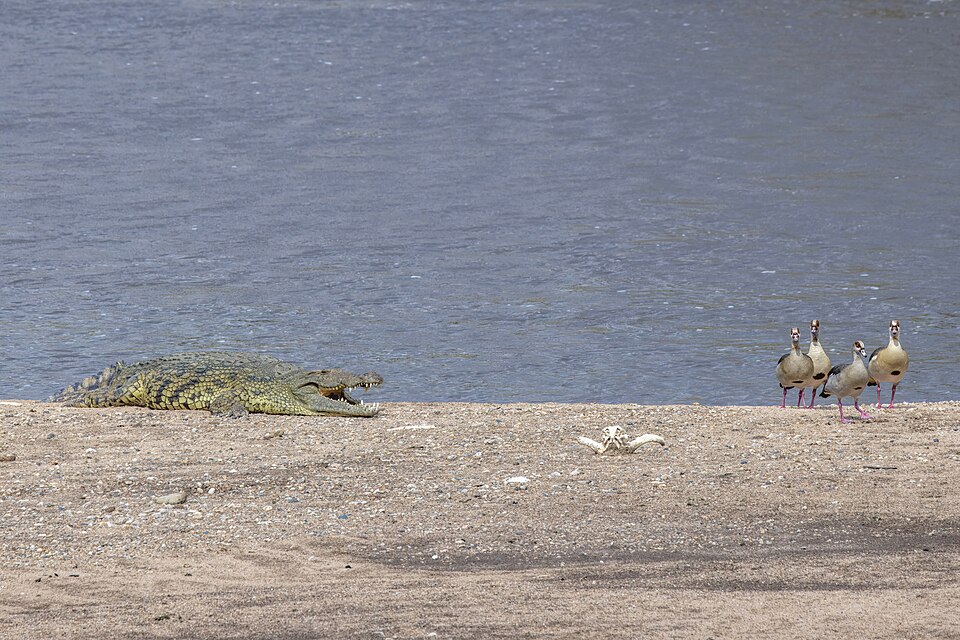
The word “crocodile” is often used for the whole group of crocodilians, which also includes alligators, caimans and the gharial. True crocodiles belong to the family Crocodylidae and are found in the tropics of Africa, Asia, Australia and the Americas. They differ in size, in the shape of the snout and in the water they prefer: some live in the sea, others in forest streams. Status labels are those of the IUCN Red List at the time of writing and can change.
Species at a glance
| Common name | Scientific name | Typical adult length | Where it lives | IUCN status |
|---|---|---|---|---|
| Saltwater crocodile | Crocodylus porosus | 4 to 5 m, large males more | Coasts, estuaries and rivers from eastern India through Southeast Asia to northern Australia | Least concern |
| Nile crocodile | Crocodylus niloticus | 3.5 to 5 m | Rivers, lakes and marshes across sub-Saharan Africa and Madagascar | Least concern |
| American crocodile | Crocodylus acutus | 3 to 4 m | Coastal wetlands of Florida, the Caribbean, Central America and northern South America | Vulnerable |
| Dwarf crocodile | Osteolaemus tetraspis | 1.5 to 1.9 m | Forest streams and swamps of West and Central Africa | Vulnerable |
| Siamese crocodile | Crocodylus siamensis | 2.5 to 3 m | Freshwater wetlands of Southeast Asia, now very scarce in the wild | Critically endangered |
Saltwater crocodile
The largest living reptile. It can cross open sea between islands and hunts at the edge of tidal rivers, taking fish, crabs, birds and sometimes large mammals.
Nile crocodile
A powerful ambush predator of African waters, famous for gathering at river crossings. Females guard their nest and carry the hatchlings to the water in their mouths.
Dwarf crocodile
The smallest true crocodile, shy and mostly active at night. It has a short, broad snout and armoured back, and lives in dense forest water where larger species cannot follow.
And more
Many other species exist, such as the Philippine, Cuban and Orinoco crocodiles, several of them restricted to a single country or river. Their small ranges are one reason they are at risk; see the threats.