What a firefly is
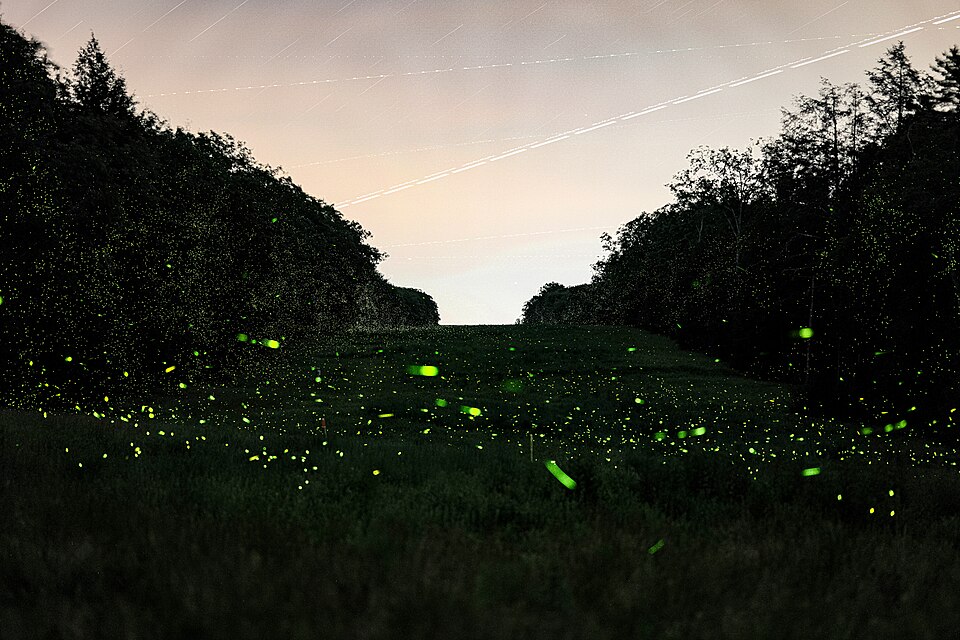
Despite the name, a firefly is neither a fly nor a fire. It is a beetle. Fireflies make up the family Lampyridae, within the order Coleoptera, and more than 2,000 species have been described, living on every continent except Antarctica. Many are called “lightning bugs” in North America, and in parts of Europe the wingless, glowing females and larvae of some species are known as glow-worms.
Like all beetles, adult fireflies have hardened front wings, called elytra, that fold over the delicate flying wings beneath. Most are soft-bodied, one to two centimetres long, often dark brown or black with a pale or reddish shield behind the head. Their life cycle has four stages: egg, larva, pupa and adult. The larvae are predators that spend most of their lives, often a year or two, on the ground, in leaf litter, under bark, in soil or in water. The adult stage is short, frequently only a few weeks, and in some species the adults hardly feed at all.
Why they glow
Fireflies are bioluminescent: they produce light through a chemical reaction in specialised cells, usually in the underside of the abdomen. In most species the light is a language. Flying males flash a pattern, and females waiting on the ground or in vegetation answer with a flash of their own, timed so precisely that each species can recognise its own kind in the dark.
The light also has an older job. Firefly eggs, larvae and pupae of many species glow too, and biologists believe this was the original function: a warning signal. Fireflies contain bitter, toxic chemicals, and a glowing larva tells a would-be predator, in effect, “I taste terrible.”
Explore this site
How they glow
The chemistry behind the light — luciferin, luciferase and oxygen — and why fireflies can make light with almost no heat. It also explains the flash codes and how they differ between species. Read how they glow.
Species and habitats
A tour of well-known groups, from the North American Photinus and Photuris to the European glow-worm, Japan's water-living fireflies and the synchronised displays in Southeast Asian mangroves, with notes on what larvae and pupae do. Meet the species.
Conservation and your garden
Firefly numbers are falling in many places. This page covers the causes and the practical steps a household, a garden or a municipality can take, plus advice on watching them without harming them. See how to help.
About this site
This is a small static information site made of plain HTML pages and a single local stylesheet: no scripts and no remote resources. Every page is one click away from every other through the navigation bar above.