Why populations are declining
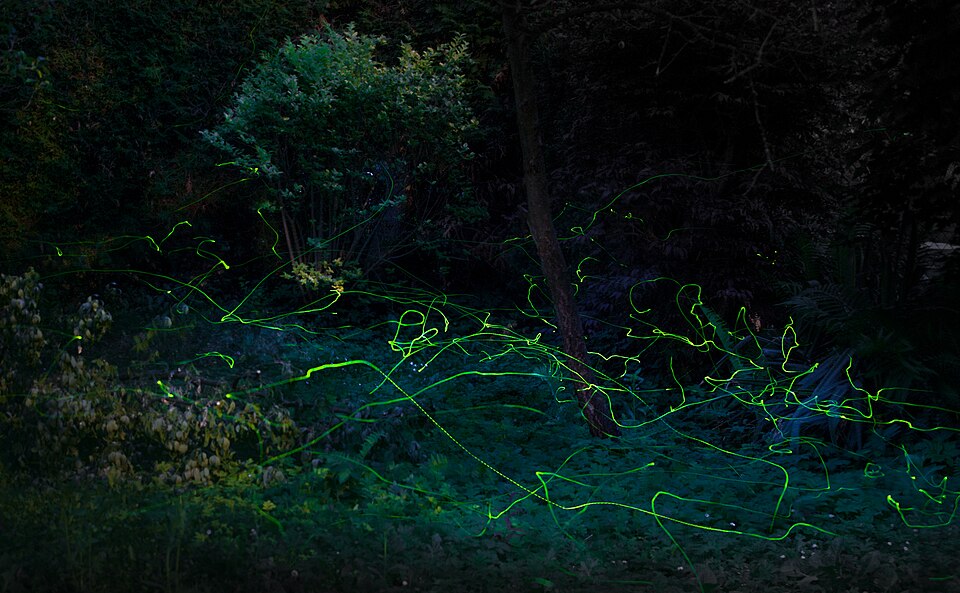
Many scientists and naturalists report fewer fireflies than in the past, although firefly numbers are hard to measure and long-term data are scarce for most regions. A 2020 expert survey of firefly researchers, published in the journal BioScience, identified three leading threats: habitat loss, light pollution and pesticide use. Several species are now considered threatened.
Light pollution
Artificial light at night can interfere with courtship. A male cannot find a female's reply if streetlights or floodlights drown it out, and some species stop flashing altogether in brightly lit places. Bright lighting can also attract or confuse the adults.
Pesticides and herbicides
Larvae live in soil and leaf litter, exactly where lawn and garden chemicals are applied. Insecticides can kill them directly, and the snails and worms they eat can carry residues. Herbicides and heavy fertilising also change the vegetation the larvae shelter in.
Loss and degradation of habitat
Building on meadows and woodland, tidying leaf litter and dead wood, mowing every inch of grass, and clearing hedgerows all remove the larval habitat. In Asia, the clearing of mangroves and riverbanks has destroyed the trees on which entire synchronous colonies depend.
Drainage and water problems
Many fireflies need damp ground, and aquatic species need clean water. Draining wetlands, concreting stream banks and polluting rivers wipe out the places where larvae feed and pupate.
Climate change
Droughts, heat waves and changes in the timing of the seasons threaten species that depend on moist soil and on the precise timing of adult emergence. Floods can also drown the larvae of ground-dwelling species.
What a household or garden can do
- Turn the lights off. Switch off or reduce outdoor lights during firefly season; use timers and motion sensors, shield lights so they point down, and close curtains.
- Choose warmer, dimmer light. Where light is needed, use low-intensity, warm-coloured bulbs rather than cool white or blue-rich ones.
- Stop using pesticides. Avoid insecticides and weed-killers on the lawn and borders; this also helps bees, birds and frogs.
- Mow less. Leave a patch of long grass, mow higher, and delay mowing in the evening flight season.
- Keep leaf litter and dead wood. Leave fallen leaves under shrubs and trees, and a log pile in a quiet corner. This is where larvae hunt and shelter.
- Keep it damp. A small pond, a rain garden or a shady, moist spot supports snails and worms, which are the larvae's food.
- Plant native. Native grasses, shrubs and trees give shelter and keep the soil moist.
- Talk to neighbours. Fireflies need space well beyond a single plot, so shared effort works best.
What a municipality can do
- Adopt dark-sky-friendly lighting rules: fully shielded fixtures, warm colours, dimming or switching off late at night, and no lighting in sensitive areas such as streams and meadows.
- Restrict pesticide use on public land, and manage verges, parks and cemeteries with later and less frequent mowing.
- Protect wetlands, stream banks and woodland edges from drainage and concreting, and plan green corridors that link habitats.
- Survey fireflies, with the help of volunteers, so that trends can be seen and the best sites protected.
- Inform residents with signs and leaflets, and run events during the flight season.
How to watch them responsibly
The aim is to enjoy the display without disturbing it.
- Use red light. If you need a torch, cover it with red film or use a red-light torch, and point it at the ground. White light disrupts flashing.
- Keep to the paths. Do not trample the grass or leaf litter, where larvae and females may be sitting.
- Do not catch them. If you do pick one up, release it at once where you found it. Never collect them in jars to use as lanterns, and never take them home: captive fireflies rarely survive.
- No flash photography. Flash and phone screens spoil the show for others and for the insects. Long exposures on a tripod give better pictures anyway.
- Be quiet and be patient. Arrive before dusk, let your eyes adjust, and keep dogs and loud groups away.
- On a boat tour, choose operators who keep engines slow, use no bright lamps and do not break branches or touch the trees.
To learn more about the animals themselves, see species and habitats, or how they glow. Back to the home page.